Which fibre to choose for your linen?
Cotton linens have been on the market for centuries and are struggling to reinvent themselves in the face of the arrival of new fibres.
Aujourd’hui, le linge de maison en bambou gagné en popularité, et ce pour de bonnes raisons. Ils sont durables, plus doux que le coton et le lin, naturellement hypoallergéniques, absorbent l’humidité et très respirants. En effet les bamboo fibre sheets vous gardent également au frais en été et au chaud en hiver.
With more and more bamboo sheets carrying 'green' or 'eco-friendly' claims and labels, it can be difficult to know what to expect when buying bamboo sheets for the first time. We've created this simple guide to help you decipher the labels and choose the best bamboo fibres. Please note: not all bamboo fibres are created equally. Therefore, they do not have the same properties and quality.
Bamboo, a revolutionary material for household linen
First of all, it is important to understand where these different tissues come from. According to the Council of Fashion Designers of AmericaBamboo is a natural fibre that can be mechanically transformed into a natural fibre or chemically transformed into a regenerated manufactured fibre. Regenerated cellulose fibres are created by taking raw natural cellulose (plant fibre) - such as bamboo or eucalyptus - and then chemically converting it into fabric. Regenerated cellulose fibres are neither truly synthetic fibres (in the sense of synthetic fibres from petroleum) nor natural fibres (in the sense of processing fibres produced directly from plants or animals, such as wool). Bamboo fibres are mechanically processed using the same processes as those used to produce flax from hemp, which makes the fibre more durable.
Il existe aujourd’hui quatre variétés de tissus en bambou sur le marché : la viscose de bambou (également appelée rayonne de bambou), des fibres de bambou plus travaillée comme par exemple la Fibre B. et la fibre de lin brut de bambou. Ce qui différencie ces tissus les uns des autres, c’est la qualité de la fibre et le processus de production. L’impact sur l’environnement et les produits utilisés étant très différents, il est important de faire attention au type de tissu que vous achetez.
Bamboo viscose, an innovative fibre
- Bamboo viscose: The majority of bamboo sheets on the market are made from bamboo viscose, also known as bamboo rayon. Viscose and rayon are essentially synonyms; the term "rayon" is more widely used in North America, while the term "viscose" is preferred in Europe. For this reason, many bedding manufacturers use the two terms interchangeably. Bamboo rayon bedding products are naturally hypoallergenic and thermo-regulating, incredibly soft, moisture absorbent and resistant to odours and bacteria. Bamboo rayon is highly absorbent and easily dyed, allowing for a wide variety of colours.
As a plant fibre, viscose is not inherently toxic or polluting.
Comme le coton, le choix des matières premières jouent un rôle dans le confort et la durabilité de la viscose. Par ailleurs, le processus de transformation joue un rôle important dans la qualité des fibres. Les produits utilisés pour la transformation de la fibre ne sont pas standardisés.
Fibre B., the revolutionary fibre
2. B-fibre: This revolutionary bamboo fibre is manufactured using the same processing method as viscose; however, the fabrics undergo an additional treatment to stretch them. This makes B-fibre lighter and finer than viscose and increases the strength of the fibres. B. fibre is ideal for applications where the laundry is treated intensively. You can also dry B. fibre in a tumble dryer, which you should avoid with viscose. The distinguishing features of Fibre B. are its high resistance to moisture and its extreme softness. It is a fine, airy fabric that is ideal for high quality bed linen or the luxury bath linen. It is partly for this reason that Comptoir du Bambou products are very popular with professionals Luxury hotels, luxury villas, spas, beauty salons.
It is one of the most sustainable and innovative textile materials of the 21st century. In the process of making B. Fiber, raw bamboo pulp is dissolved with a non-toxic solvent, producing a non-hazardous effluent. The fibre is created using a closed loop system that recycles 98 % of the water used during manufacture. The result is a bamboo lyocell fabric that is stronger and softer than simple bamboo viscose, free of harmful chemicals and requires less energy and water to produce.
Fibre B. is similar to modal or lyocell.
At Comptoir du Bambou, we have developed a closed-loop manufacturing process with no toxic chemicals. During the production process of our bamboo fibre, Fibre B., water can be used up to 200 times and we recycle up to 98 % in the process.
Bamboo flax fibre
- Bamboo linen fibre: Unlike bamboo viscose, modal and lyocell, which use a chemical process to produce fibres, bamboo linen is produced mechanically without chemicals. The process is very similar to the production of common linen fabrics made from hemp or flax. The wooden parts of the bamboo are mechanically crushed before an enzymatic retting and washing process treats its walls. After the bamboo flax fibre (the long, strong, flexible fibres from the inner bark of the plant) is extracted, it is spun into yarn. The result is a very durable fabric that is slightly coarse and wrinkles easily, making it unsuitable for soft, intimate bedding products. Purchasing bamboo linen bedding is very high maintenance, as it requires continuous ironing after washing. It is important to note that bamboo linen represents only a tiny fraction of the bamboo fabric on the market, due to its more intensive and expensive process. Furthermore, bamboo linen requires a lot of human labour, so it is important to check that manufacturers use good, fair and safe labour practices.
-
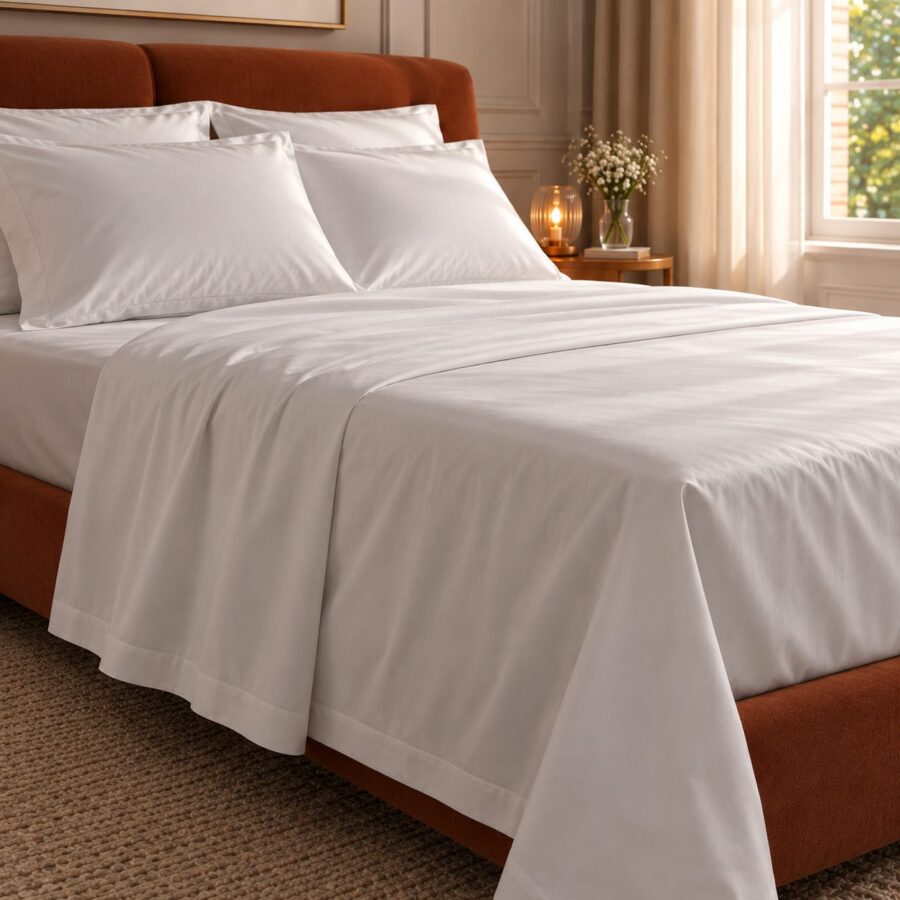 Drap plat | Satin de Bambou | BlancPrice range: 85,00€ through 100,00€ VAT INCLUDED
-
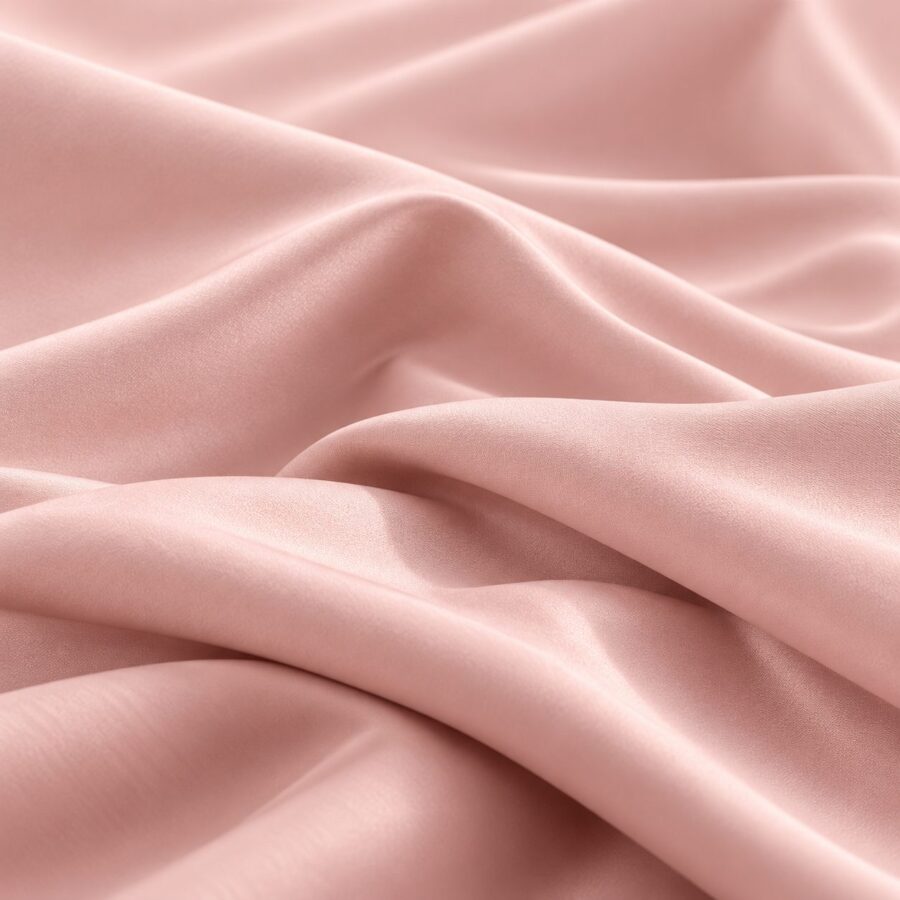 Drap plat | Satin de Bambou | Rose PoudréPrice range: 85,00€ through 100,00€ VAT INCLUDED
-
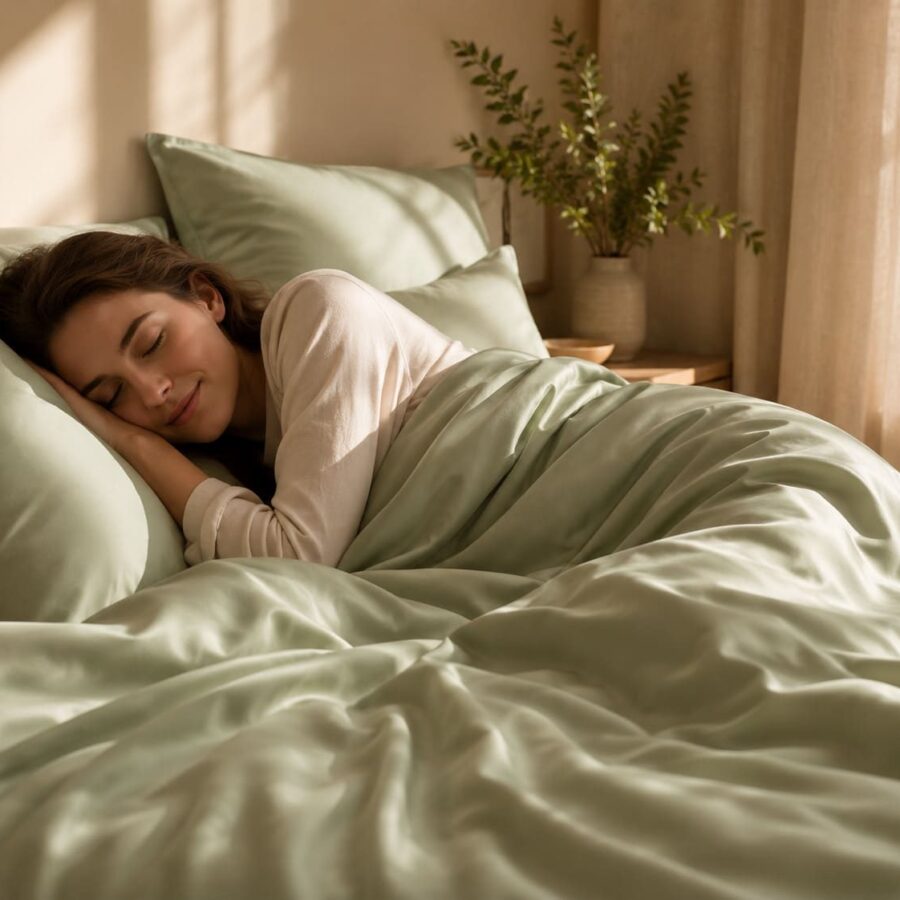 Drap plat | Satin de Bambou | PistachePrice range: 85,00€ through 100,00€ VAT INCLUDED